

Orthodontic Care
Discreet, comfortable teeth straightening designed around your schedule, your smile goals, and your life in Charlotte.
Crooked, crowded, or gapped teeth affect more than the way your smile photographs. Misaligned bites can make chewing uneven, wear certain teeth down faster than others, and leave corners of your mouth harder to clean no matter how carefully you brush. Over time, those small misalignments can contribute to jaw strain, chipped enamel, and a smile you learn to hide rather than share.
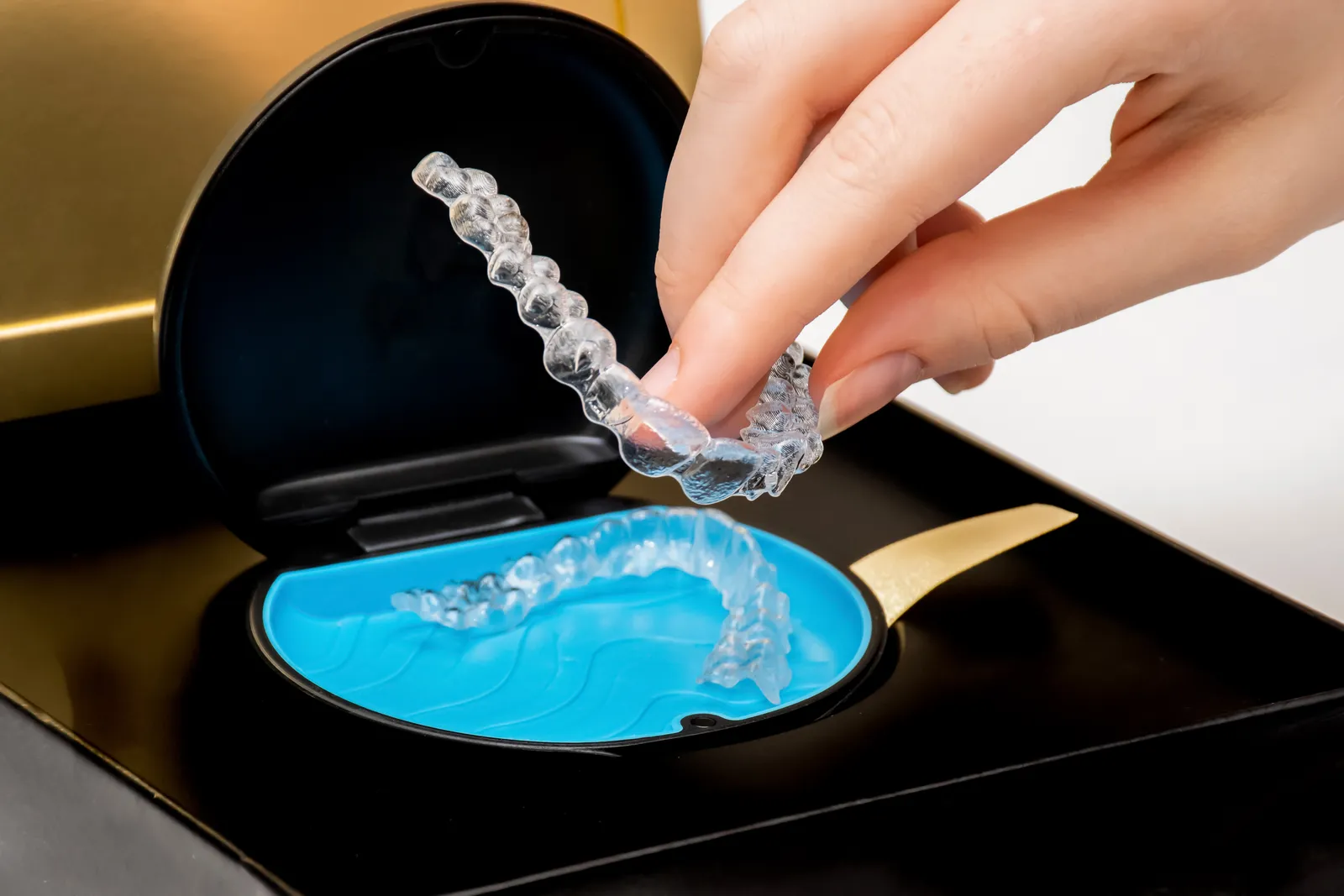
Invisalign moves teeth gradually using a series of clear, custom-fitted aligner trays instead of metal brackets and wires. Each set shifts your teeth a fraction of a millimeter before you advance to the next tray in the sequence, and because the aligners are virtually transparent, most people around you will never notice you're mid-treatment. At Amity Dentistry, we start with a full digital scan and bite evaluation so your plan is built around your specific alignment pattern, not a generic template.
Our approach treats the whole bite, not just the teeth that bother you most. We look at how your upper and lower arches meet, how your jaw joints function, and how your treatment will hold up years after your last aligner comes off. That's the difference between a straighter smile today and a stable, comfortable bite for the long run.
Alignment issues show up differently from person to person. Some patients notice obvious crowding; others only feel it in how their jaw tires out by the end of a meal. Here are the most common signals we hear about during consultations.
Not every alignment concern is visible in the mirror. A thorough clinical exam, including digital imaging of how your teeth meet under pressure, is the only reliable way to know whether Invisalign alone will correct your bite or whether a combined approach makes more sense.
Misalignment rarely has a single cause. Most patients arrive with a combination of the factors below, which is exactly why we map your bite in detail before recommending a treatment plan.
Jaw size and tooth size are both largely inherited, and a mismatch between the two is one of the most common reasons teeth crowd together as adult teeth come in.
When a baby tooth is lost early or an adult tooth is extracted, neighboring teeth often drift into the open space, pulling the whole arch out of balance.
Prolonged thumb sucking, pacifier use, or tongue thrusting during the formative years can push front teeth forward and narrow the dental arch over time.
Teeth continue to move slightly throughout adulthood, drifting forward and crowding the lower front teeth even in patients who had straight smiles in their twenties.
Teeth that were straightened with braces years ago can gradually relapse once retainer wear is stopped, since the bone and ligaments around teeth remain naturally flexible.
Chronic mouth breathing changes resting tongue and jaw posture, which over years can influence how the upper and lower arches develop in relation to one another.
Every Invisalign plan at Amity Dentistry follows the same careful sequence, giving us the chance to adjust along the way rather than simply handing you a box of trays and wishing you luck.
We talk through what bothers you about your current smile, review your dental history, and discuss what realistic timelines and outcomes look like for your specific bite.
A digital 3D scan captures the precise shape of your teeth and bite, replacing messy impression trays and giving us data to simulate how your smile will move tray by tray.
We map out the full sequence of aligners, show you a projected preview of your finished smile, and agree on a timeline before any trays are ordered.
You wear each set of aligners for about one to two weeks, switching to the next tray in the series as your teeth gradually shift into their new positions with minimal discomfort.
We check your progress at regular intervals, fine-tune the plan if teeth are moving faster or slower than expected, and fit you for a retainer once treatment wraps up.
Invisalign does more than reposition teeth for a nicer photo. Patients who complete treatment consistently describe changes that go well beyond appearance.
Once teeth are properly spaced, floss and brush bristles reach areas that used to be blocked by overlap, which lowers your long-term risk of cavities and gum irritation.
When upper and lower teeth meet correctly, chewing forces distribute evenly instead of concentrating on a few teeth, which helps protect enamel from premature wear.
Correcting an uneven bite can relieve pressure on the jaw joint, which some patients feel as less clicking, tension, or soreness after a long day of talking and chewing.
Because aligners are removable, you keep eating the foods you enjoy and speaking without the lisp sometimes associated with fixed wires and brackets.
Invisalign works through controlled, low-level force applied continuously to the teeth. Each aligner is designed to move specific teeth a small, calculated amount, and that movement only happens reliably if the tray stays in place for roughly 20 to 22 hours a day. Removing aligners too often for meals, drinks, or convenience interrupts that steady pressure, which can slow progress or cause teeth to settle slightly before the next tray is ready to continue the movement.
This is also why we schedule regular check-ins throughout your treatment. Teeth don't always move exactly as digitally projected, particularly around teeth with existing fillings, crowns, or unusual root shapes. Catching small deviations early, sometimes with a refinement set of aligners, keeps your overall treatment timeline on track rather than letting a minor shift compound over several tray changes.
Retention after treatment matters just as much as the active movement phase. Teeth are held in bone by ligaments that remain somewhat elastic for life, meaning they can drift back toward their original position without a retainer holding the new alignment in place. We build a retention plan into every Invisalign case from the start, not as an afterthought once the last tray is finished.
A few consistent daily habits make a noticeable difference in comfort, hygiene, and how closely your treatment follows its projected timeline.
Keep aligners in for 20 to 22 hours daily, removing them only to eat, drink anything besides water, and brush your teeth.
Rinse and gently brush your aligners daily with lukewarm water to prevent buildup, odor, and clouding of the clear plastic.
Always brush and floss after eating before putting trays back in, since trapped food against teeth for hours raises cavity risk.
Keep removed aligners in their case, not a napkin or pocket, to avoid warping, loss, or accidental damage between wears.
Follow the recommended switch schedule closely rather than changing trays early just because teeth feel loose or comfortable.
Once your active treatment is complete, wear your retainer exactly as instructed to protect the results you worked for.
These habits support your treatment plan, but they don't replace scheduled check-ins with our team, who can catch fit issues or track changes you might not notice day to day.
"Patients often tell us they were nervous about committing to aligners for over a year, but once they saw their own digital preview and understood exactly what each stage involved, that uncertainty turned into confidence. We're here for every question along the way, not just at the start and finish."
Answers to the questions we hear most often from Charlotte patients considering Invisalign at Amity Dentistry.
BOOK YOUR VISIT
Join the Charlotte families who trust Amity Dentistry. New patients and emergencies are always welcome.
 980-423-1244